Most of the work that makes art possible remains out of sight until the very end. We encounter the exhibition once the doors open, the performance as it begins, the book once it has been printed, the event when it starts at the announced time. What we rarely see is everything that had to happen beforehand: the hours of work and rehearsal, the negotiations, the administration and care work, the stretches without money, the plans revised again and again, the fatigue accumulating in the background, and all the small things that keep a project, a practice or a space alive.
Across Southeast Europe, much of this work is carried out by independent spaces and cultural organisations operating with limited resources and uncertain, intermittent funding, while economic and political shifts directly affect their ability to make work and to keep going.
Timișoara, Belgrade, Sofia, Skopje, Prizren and Tirana are very different places. Yet some conditions recur across them: precarious cultural work, limited access to resources, and the constant need to adapt, collaborate and find ways of supporting one another.
When the same conditions persist for long enough, they can begin to feel inevitable. A small team doing the work of several people starts to seem normal. The next few months depending on the next funding call starts to seem normal. Time for research, rest, or simply for not having to produce something immediately becomes a luxury. Exhaustion, meanwhile, is easily recast as something personal – a problem to manage individually, even when the conditions producing it are widely shared.
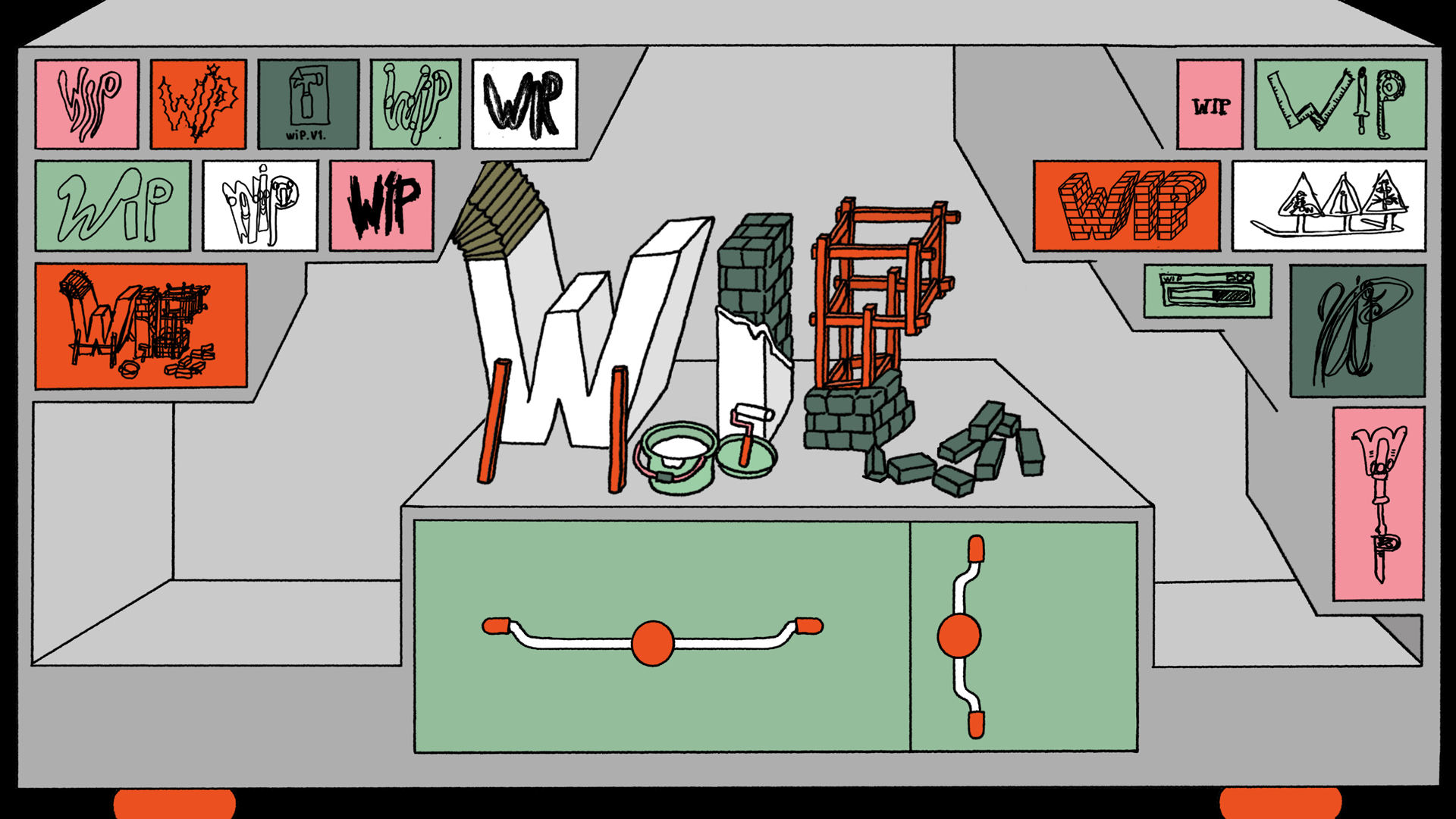
Work in Progress begins with this contradiction: with work itself, and with the conditions that allow it to happen. From October 2026 into early 2027, the project follows work through different forms – physical gesture and effort, time and rhythm, relationships between people, exhaustion, and the possibility of making something together.
Three practice and research labs, a group exhibition, a mediation programme and a regional gathering of independent initiatives approach these questions at different scales. They move from the way one body finds its rhythm in relation to others to the way a cultural organisation tries to make it from one year to the next. Rather than starting from the finished work, Work in Progress stays with the processes, dependencies and relationships that surround it.
If the same difficulties keep resurfacing from one city to another, perhaps they can no longer be understood only as problems for individual artists or organisations to solve. Continuing cannot indefinitely mean adapting, doing more with less and finding one more temporary fix. There is value in placing these experiences next to one another: in asking what they share, where they differ, and what might become imaginable beyond the solutions each of us has had to improvise alone.
Work in Progress does not propose an ideal way of working, nor does it offer another recipe for becoming more productive. It looks instead at what has gradually come to be accepted as the price of keeping things going — too few resources, too much work, overwork, invisible labour, permanent adaptation — and asks what changes once these conditions are made visible, discussed and shared.
Perhaps, beyond the question of how we keep producing culture, there is a more important one: under what conditions do we want to continue?
Work in Progress is organised by Foc și Pară Association and takes place in Timișoara from October 2026 to January 2027.
Cultural project co-funded by the Administration of the National Cultural Fund (AFCN). The project does not necessarily represent the position of the Administration of the National Cultural Fund. AFCN is not responsible for the content of the project or for how its results may be used. Responsibility for the project and its outcomes rests entirely with the funding beneficiary.
The project is organised in partnership with the Municipality of Timișoara, through Centrul de Proiecte. #SpațiiPentruComunitate